How a pioneering female doctor in Rome changed the way the world sees children—and why we proudly carry on her legacy at Jubilee Academy.
When prospective parents walk into a classroom at Jubilee Academy for the first time, they often notice the difference immediately. It’s quieter. Everything is at the child’s eye level. The materials look beautiful and intriguing, not just like standard toys. There are no rows of desks facing a teacher at a blackboard.
It looks different because it is different.
Choosing a school is one of the biggest decisions a parent makes. You’ve chosen Montessori for your child, but you might still be wondering: Where did this come from? Was it just a trend that stuck around?
The truth is, the Montessori method wasn’t merely “invented”; it was discovered through scientific observation. Its origins are rooted not in a posh private school, but in one of the poorest slums of early 20th-century Rome.
Here is the story of how, when, and why Montessori was created, and why it remains the foundation of everything we do at Jubilee Academy today.
The “Who”: A Scientist, Not Just a Teacher
To understand Montessori education, you have to understand Dr. Maria Montessori.
Maria Montessori was a trailblazer. At a time when women were rarely encouraged to pursue higher education, she became one of the first female physicians in Italy in 1896. She was a scientist first. Her background was in medicine, psychiatry, and anthropology.
She didn’t start out aiming to revolutionize education. She started out trying to help children whom society had given up on.
The “Why”: The Initial Spark
Early in her medical career, Dr. Montessori worked in Rome’s asylums with children labeled as “deficient” or intellectually disabled. At the time, these children were practically warehoused in bare rooms, given nothing to do.
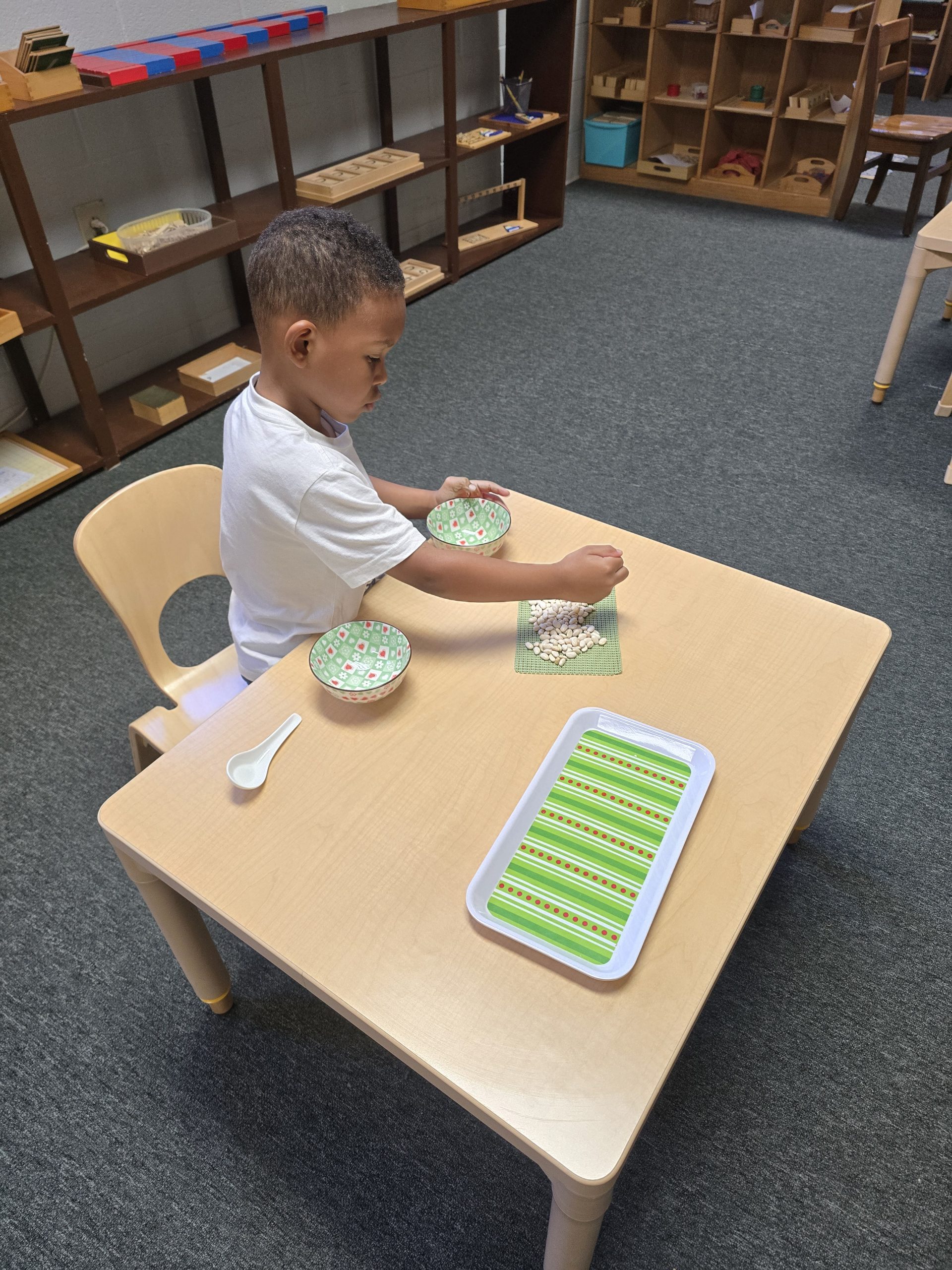
While observing them, Montessori noticed something profound. After meals, the children would crawl on the floor, anxiously picking up crumbs and manipulating them with their fingers.
Other doctors saw this as proof of their deficiency. Maria Montessori saw something else entirely: a desperate human craving for sensory stimulation and a desire to learn through touch.
She realized their problem wasn’t medical; it was pedagogical (educational).
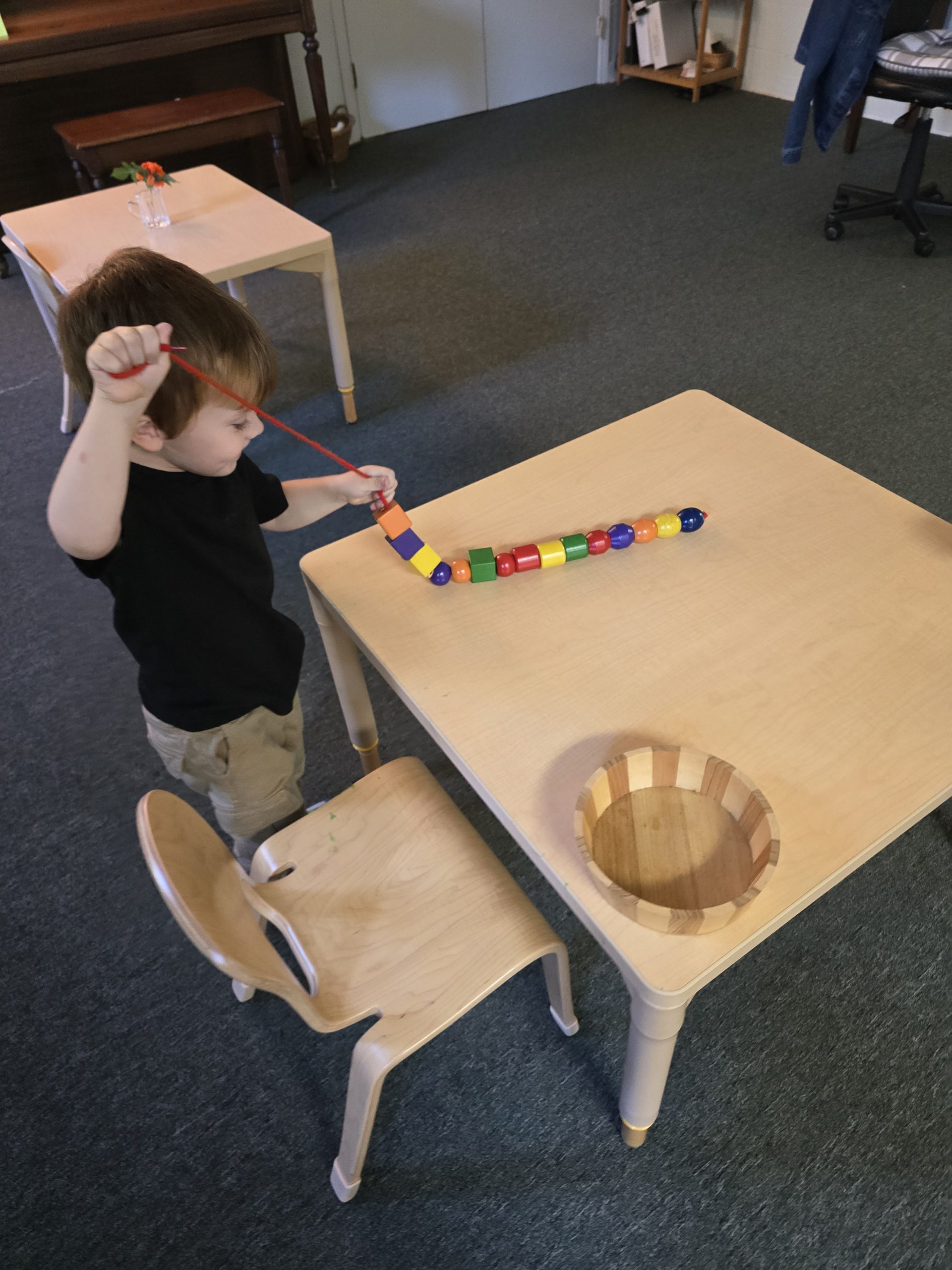
She began designing manipulative materials—the ancestors of the materials your children use at Jubilee Academy today—to help them learn through their senses. The results were astounding. Under her guidance, these children, whom the world had discarded, learned to read and write. Many even passed the standard state exams typically given to “normal” children.
Maria was thrilled, but it led her to a burning question: If these methods could work miracles for children with significant cognitive hurdles, what could they do for typically developing children?
The “When” and “How”: The Miracle in the Slums
The opportunity to test her theory came in 1907.
In the San Lorenzo district of Rome—a notorious slum plagued by poverty and crime—developers were renovating tenement buildings. They had a problem: while parents were away working during the day, children ages 3 to 6 were left unsupervised, running wild and vandalizing the new buildings.
The developers approached Dr. Montessori. They offered her a room in the tenement to gather the children and keep them out of trouble.
She called it the Casa dei Bambini, or “Children’s House.”
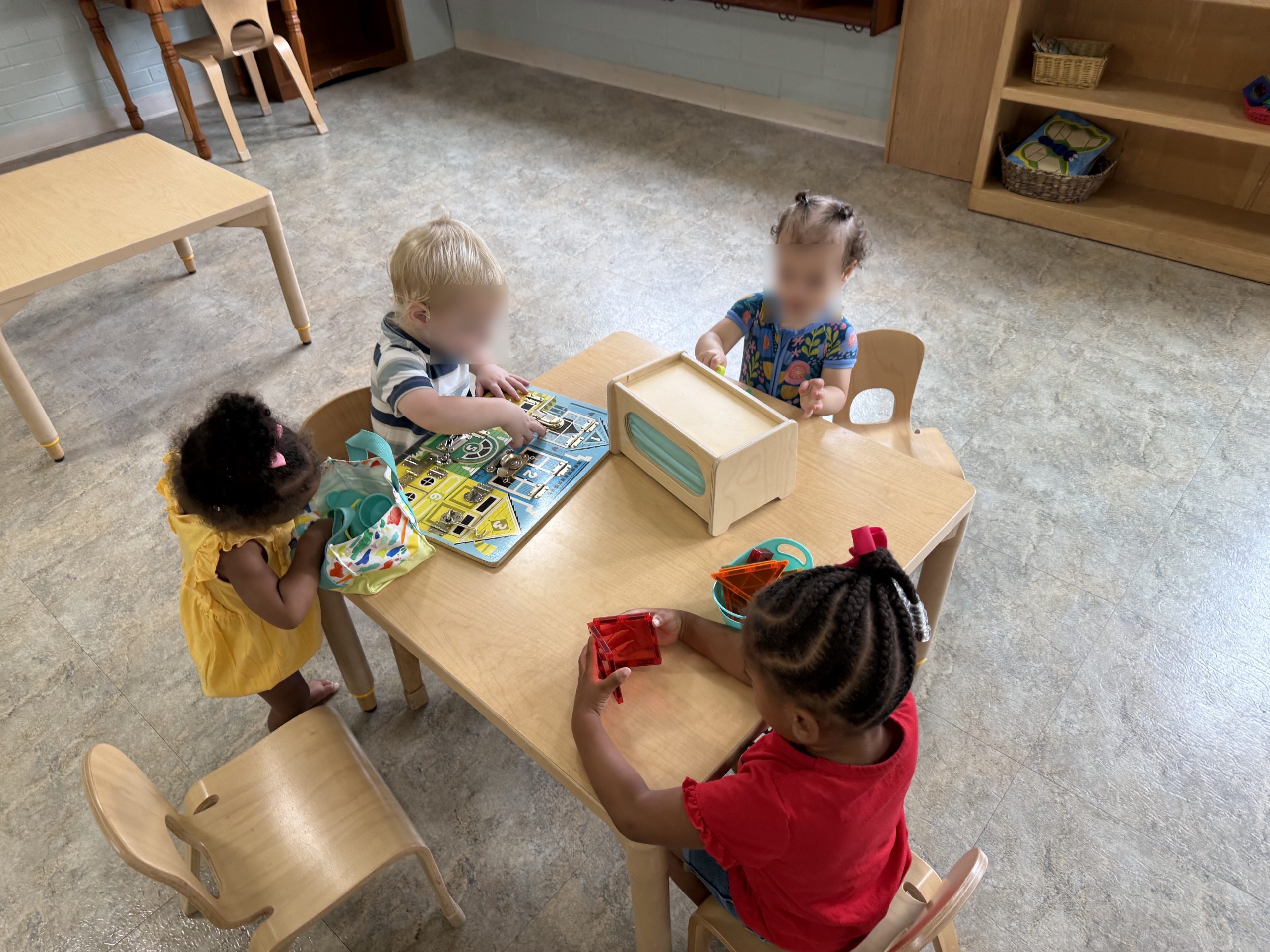
When the school opened, the fifty or so children were described as unruly, tearful, and frightened. Dr. Montessori brought in her sensory materials, child-sized furniture (a revolutionary idea at the time!), and simply… observed.
What happened next stunned the educational world.
As the children began engaging with the materials, their behavior transformed. The “wild” children became deeply focused, calm, and orderly. They began to take pride in their environment, cleaning up after themselves. Most shockingly, without direct instruction, they “exploded” into writing and reading.
Dr. Montessori discovered that when children are placed in a “prepared environment” that respects their natural development, they don’t need to be forced to learn. They have an innate, insatiable drive to do it themselves.
One day, a child famously told her, “Help me to do it myself.” That became the cornerstone of her philosophy.
From Rome to Jubilee Academy
Dr. Montessori spent the rest of her life traveling the world, training teachers, observing children across different cultures, and refining her methods based on those scientific observations.
She proved that education isn’t about a teacher pouring facts into a child’s empty head. It is about igniting a flame that is already there.
This is why Montessori isn’t a fad. It has survived for over a century because it is based on universal truths about how human beings develop.
At Jubilee Academy, we honor this history every day.
When you see your child deeply focused on a practical life activity, or figuring out math concepts with golden beads, you are seeing the direct results of Maria Montessori’s observations in Rome over 100 years ago. We believe, just as she did, that your child is capable, independent, and possesses a natural love of learning that needs only the right environment to flourish.